

How to Calculate Square Footage: Rooms, Houses and Irregular Spaces
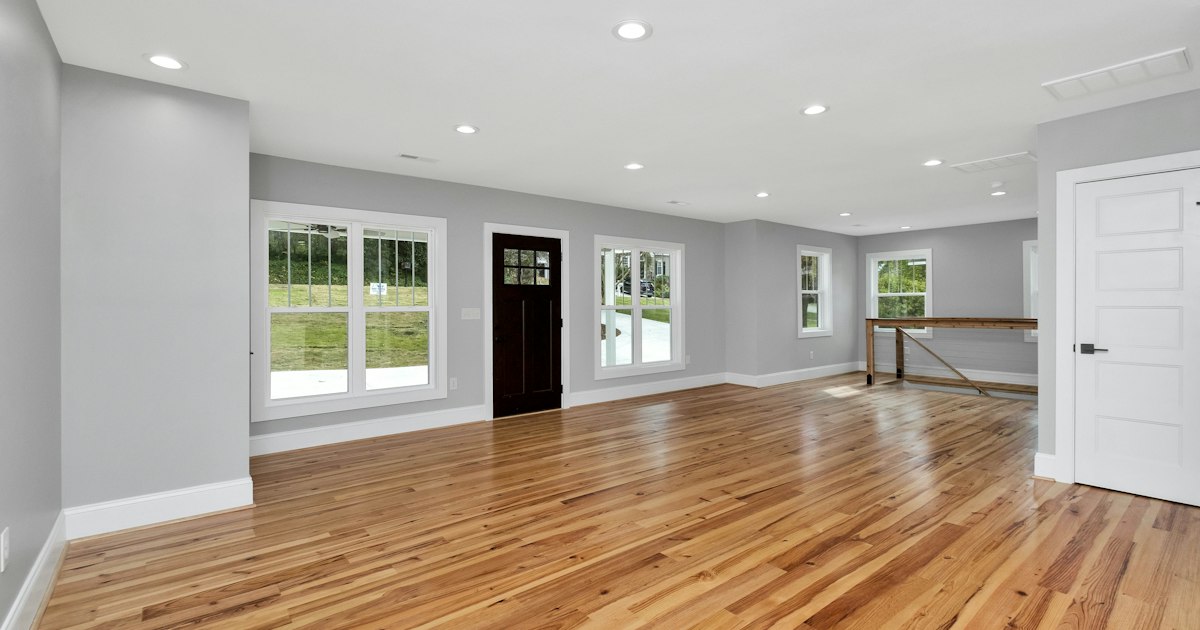
Learn how to calculate square footage step by step, measure L-shaped and irregular rooms, convert inches and meters, and work out how much flooring, carpet or paint to buy.
Table of Contents 12 sections
- What is square footage?
- What you need
- How to calculate square footage of a room in 4 steps
- How to figure square footage of irregular rooms
- How to calculate the square footage of a house
- How to convert to and from square feet
- How to measure square footage for flooring and paint
- Common mistakes to avoid
- Practice problems
- Calculate square footage instantly
- How to use this guide
- Frequently asked questions
Whether you are ordering new flooring, painting a room, comparing house listings or pricing a landscaping job, sooner or later you need to know a space's square footage. The good news is that calculating square footage only takes a tape measure and basic multiplication. This guide shows you how to calculate square footage step by step for rectangular rooms, L-shaped rooms, triangles, circles and whole houses, how to convert inches and meters to square feet, how much extra material to buy, and how to avoid the mistakes that send people back to the store.
What is square footage?
Square footage is the area of a flat surface measured in square feet. One square foot is a square measuring one foot (12 inches) on every side. When we say a room is 150 square feet, we mean that 150 of those one-foot squares would cover the floor. Area is always two-dimensional, which is why we multiply two measurements together. If you need the space inside a room instead, such as for concrete, soil or air volume, multiply by a third dimension and use the volume calculator.
What you need
- A 25 ft tape measure or a laser distance measurer
- A notepad or your phone to sketch the room
- A calculator, or the free square footage calculator
- For large outdoor areas, a long measuring tape (100 ft) or a measuring wheel
How to calculate square footage of a room in 4 steps
Step 1: sketch the space
Draw a rough outline of the floor, including closets, alcoves and doorways where the flooring will run. You do not need to draw to scale; the sketch is only a place to write down numbers so nothing is missed.
Step 2: measure the length and width
Measure from wall to wall along the floor in both directions. Measure each direction twice, near each end of the room, and keep the larger figure, because few rooms are perfectly square. Write the measurement in feet and inches, such as 13 ft 7 in.
Step 3: convert inches to decimal feet
Divide the inches by 12 and add the result to the feet. 13 ft 7 in becomes 13 + 7/12 = 13.58 ft. This is the step people most often get wrong, because 7 inches is not 0.7 feet.
| Inches | Decimal feet | Inches | Decimal feet |
|---|---|---|---|
| 1 in | 0.08 ft | 7 in | 0.58 ft |
| 2 in | 0.17 ft | 8 in | 0.67 ft |
| 3 in | 0.25 ft | 9 in | 0.75 ft |
| 4 in | 0.33 ft | 10 in | 0.83 ft |
| 5 in | 0.42 ft | 11 in | 0.92 ft |
| 6 in | 0.50 ft | 12 in | 1.00 ft |
Step 4: multiply length by width
A room that is 13.58 ft by 11.25 ft has 13.58 × 11.25 = 152.8 square feet. Round to one decimal place for planning, and round up when you order materials.
How to figure square footage of irregular rooms
Most real rooms are not perfect rectangles. The trick is to break the floor into simple shapes, calculate each one, and then add or subtract.
L-shaped rooms
Draw a line that splits the L into two rectangles. Suppose the long part is 16 ft by 12 ft and the short leg is 8 ft by 6 ft. The areas are 192 and 48 square feet, so the room is 240 square feet. It does not matter where you draw the dividing line, as long as no part of the floor is counted twice.
Rooms with a cut-out
Sometimes it is easier to subtract. A 20 ft by 15 ft basement (300 sq ft) with a 6 ft by 4 ft mechanical room you will not floor has 300 - 24 = 276 square feet of flooring area.
Triangles and angled walls
A triangular section, such as a corner cut off at 45 degrees, has an area of base × height ÷ 2. A triangle with a 6 ft base and a 6 ft height is 18 square feet. If you can only measure the two short sides of a right triangle, those sides are the base and height. If you know the angled wall and one side, find the other with the Pythagorean theorem: the missing side is the square root of (long side² - known side²).
Circles and curves
For a round area, measure the diameter (straight across through the center), halve it to get the radius, and use π × r². A bay window shaped like a half circle 6 ft across has a radius of 3 ft, so its area is 3.1416 × 9 ÷ 2 = 14.1 square feet.
How to calculate the square footage of a house
There are two practical ways to estimate the size of a home.
- Room by room. Calculate each room, hallway and closet, then add them up. This gives the net floor area and is best for flooring, heating and cooling calculations. It will be smaller than the listed size because it leaves out interior wall thickness.
- Exterior measurement. Measure the outside walls of each floor, break the footprint into rectangles, and add the floors together. This is closer to how appraisers measure gross living area in the US, following the ANSI Z765 standard.
Under that standard, finished, heated space above grade counts; garages, unfinished areas, porches and spaces with ceilings below 7 feet generally do not, and basements are reported separately. Listings sometimes use different rules, which is why two sources can quote different sizes for the same house. When you are comparing homes, the price per square foot (price ÷ living area) is a useful yardstick, and the home affordability calculator shows what price range fits your budget.
How to convert to and from square feet
| Convert | Do this | Example |
|---|---|---|
| Square inches to square feet | Divide by 144 | 2,880 sq in = 20 sq ft |
| Square feet to square yards | Divide by 9 | 270 sq ft = 30 sq yd |
| Square meters to square feet | Multiply by 10.764 | 25 m² = 269 sq ft |
| Square feet to square meters | Multiply by 0.0929 | 1,500 sq ft = 139.4 m² |
| Square feet to acres | Divide by 43,560 | 87,120 sq ft = 2 acres |
| Acres to square feet | Multiply by 43,560 | 0.5 acre = 21,780 sq ft |
Notice that you cannot convert area units with the length factors. A yard is 3 feet, but a square yard is 3 × 3 = 9 square feet. A meter is 3.281 feet, but a square meter is 3.281² = 10.764 square feet.
How to measure square footage for flooring and paint
Flooring
Calculate the floor area, add a waste factor (about 10% for planks laid straight, 15% for diagonal tile or herringbone), then divide by the coverage per box and round up. If laminate comes in boxes covering 22.5 square feet and your room needs 240 square feet plus 10%, that is 264 ÷ 22.5 = 11.7, so buy 12 boxes.
Carpet
Carpet is usually priced by the square yard. Divide square footage by 9: a 15 ft by 12 ft room is 180 sq ft, or 20 square yards, before waste. Because carpet comes on 12 ft wide rolls, rooms wider than 12 ft need a seam and more waste.
Walls and paint
For walls, multiply the perimeter of the room by the ceiling height, then subtract about 20 sq ft per door and 15 sq ft per window. A 12 ft by 14 ft room with 8 ft ceilings has a perimeter of 52 ft and wall area of 416 sq ft. Minus one door and two windows, that is 366 sq ft. One gallon covers about 350-400 square feet per coat, so two coats need about two gallons.
Lawns, patios and lots
Outdoors, the same shapes apply. Measure the yard in sections, calculate each one, and subtract the house, driveway and garden beds. For concrete or gravel you also need the depth, so convert square feet to cubic yards with: square feet × depth in inches ÷ 324.
Common mistakes to avoid
- Treating inches as decimals. 5 ft 6 in is 5.5 ft, not 5.6 ft.
- Mixing feet and inches in one multiplication. Convert first.
- Ignoring closets and doorways that receive the same floor covering.
- Counting overlapping areas twice when you split an irregular room.
- Using length factors for area. Square yards need 9, square meters need 10.764.
- Ordering the exact area. Always add waste and round up to whole boxes or rolls.
Practice problems
- A room measures 11 ft 3 in by 9 ft 9 in. What is the area? Answer: 11.25 × 9.75 = 109.7 sq ft.
- An L-shaped deck has sections 16 ft by 10 ft and 8 ft by 6 ft. How many square feet of decking do you need with 10% waste? Answer: (160 + 48) × 1.1 = 228.8, about 229 sq ft.
- A circular rug is 8 ft across. What area does it cover? Answer: 3.1416 × 4² = 50.3 sq ft.
- A lot is 0.35 acres. How many square feet is it? Answer: 0.35 × 43,560 = 15,246 sq ft.
Calculate square footage instantly
Skip the arithmetic with the free square footage calculator. It handles rectangles, L-shaped rooms, triangles, circles and trapezoids in any unit, converts the result to square meters, yards and acres, and adds a waste allowance and cost estimate for flooring. For three-dimensional jobs like concrete and mulch, use the volume calculator, and browse every tool in our math calculators collection.
How to use this guide
Work through the steps in order with your own numbers, writing each result down as you go, then check your answer against the matching calculator on this site. If your hand calculation and the calculator disagree, the usual culprits are unit conversions, rounding, and a percentage typed as a whole number instead of a decimal. The examples are illustrations, not recommendations, and your situation may call for different assumptions. For important financial or health decisions, confirm your plan with a licensed professional who knows your circumstances. This article is reviewed periodically and was last updated in November 2026.
Frequently asked questions
How do you calculate square footage of a room?
Measure the length and width in feet, convert any inches to decimal feet by dividing by 12, then multiply length by width.
How do you figure square footage of an irregular room?
Split the room into rectangles, triangles or circles, calculate each area separately and add them together. Subtract any areas that will not be covered.
How do I calculate square footage of a house?
Add up the area of every finished room and hallway, or measure the outside of each floor and multiply length by width. Garages and unfinished spaces are usually excluded.
How do you calculate square footage for flooring?
Find the floor area, add 10% to 15% for waste, divide by the coverage per box and round up to whole boxes.
How do you convert square feet to square yards?
Divide square feet by 9, because one square yard is 3 feet by 3 feet.
How do I calculate square footage from inches?
Multiply length by width in inches and divide by 144. Or convert each measurement to feet first by dividing by 12.
This square footage calculator is an educational estimate. Measure carefully, round up when ordering materials, and confirm official floor area with your appraiser, builder or local assessor, because measurement standards differ.

About the author
Sawera Shahid is the founder and lead writer of Calculators360. She builds the site's free online calculators and writes clear, step-by-step guides on finance, math and health, with every formula explained and worked examples you can check by hand.
Related posts
How to Find the Least Common Multiple (LCM): 4 Easy Methods
Calculators360 All calculatorsMathFinanceHealthBlogAboutContact Light mode Home › Blog › How to Find the Least…

How to Find the Greatest Common Factor (GCF): 3 Easy Methods
Calculators360 All calculatorsMathFinanceHealthBlogAboutContact Light mode Home › Blog › How to Find the…
How to Use the Pythagorean Theorem (With Examples)
Learn the Pythagorean theorem formula, how to find the hypotenuse or a missing leg step by step, how to spot…