

How to Calculate Macros: Step-by-Step Guide With Examples
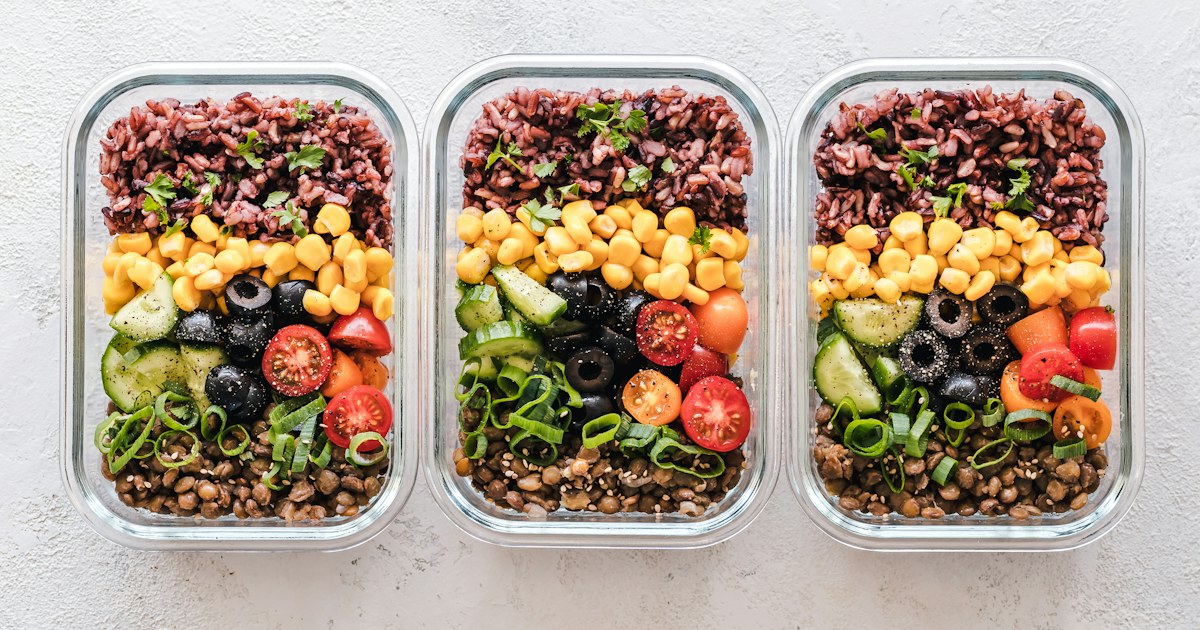
Learn how to calculate your macros by hand in six steps, from BMR to grams of protein, carbs and fat, with worked examples for weight loss, muscle gain and keto.
Table of Contents 20 sections
- What you need before you start
- Step 1: Calculate your BMR
- Step 2: Multiply by your activity factor to get TDEE
- Step 3: Set your calorie goal
- Step 4: Set protein first
- Step 5: Set fat
- Step 6: Fill the rest with carbohydrate
- The percentage method (quick version)
- Macro calculation for keto
- How to track and adjust
- How to choose the right activity multiplier
- Macros by body composition: using lean body mass
- Macros for vegetarians and vegans
- Do macros differ for men and women?
- Quick reference: calories from macros
- Common calculation mistakes
- Sample day at 2,000 calories (30/40/30)
- Next steps
- How to use this guide
- Frequently asked questions
If you have ever wondered where the numbers in a macro calculator come from, this guide walks through exactly how to calculate macros by hand. By the end you will be able to work out your own calorie target and gram targets for protein, carbs and fat using nothing but a calculator and a few formulas. If you would rather skip the math, use our free macro calculator, which follows the same steps.
What you need before you start
- Your age, sex, current weight and height
- An honest estimate of how active you are in a typical week
- A clear goal: lose fat, maintain or gain muscle
- A basic calculator or phone
Convert units first. Pounds divided by 2.2046 gives kilograms. Inches multiplied by 2.54 gives centimeters.
Step 1: Calculate your BMR
Basal metabolic rate is the energy your body burns at rest. The Mifflin-St Jeor equation is the standard for healthy adults:
Women: BMR = (10 x kg) + (6.25 x cm) - (5 x age) - 161
Worked example: a 35-year-old woman, 70 kg, 165 cm. BMR = 700 + 1,031 - 175 - 161 = 1,395 calories. Our guide to calculating BMR covers the formula in more depth, and the BMR calculator will check your result.
Step 2: Multiply by your activity factor to get TDEE
| Activity level | Multiplier |
|---|---|
| Sedentary | 1.2 |
| Lightly active (1-3 days) | 1.375 |
| Moderately active (3-5 days) | 1.55 |
| Very active (6-7 days) | 1.725 |
| Athlete or physical job | 1.9 |
Continuing the example with moderate activity: 1,395 x 1.55 = 2,162 calories. This is her maintenance level, or TDEE. When in doubt, pick the lower multiplier. People overestimate activity far more often than they underestimate it.
Step 3: Set your calorie goal
- Fat loss: subtract 10 to 25 percent. Example: 2,162 x 0.80 = 1,730 calories.
- Maintenance: keep TDEE as is.
- Muscle gain: add 5 to 15 percent. Example: 2,162 x 1.10 = 2,378 calories.
Do not go below roughly 1,200 calories (women) or 1,500 (men) without medical supervision. To plan the size of your deficit, try the calorie deficit calculator.
Step 4: Set protein first
Protein is best set in grams per kilogram of body weight rather than as a percentage, because your need depends on your size, not on your calorie intake. Typical targets:
| Goal | Protein (g per kg) | Protein (g per lb) |
|---|---|---|
| General health | 1.0 - 1.4 | 0.45 - 0.65 |
| Fat loss | 1.6 - 2.2 | 0.7 - 1.0 |
| Muscle gain | 1.6 - 2.2 | 0.7 - 1.0 |
Example: fat loss for a 70 kg woman at 1.8 g/kg = 126 g protein = 504 calories. Details are in our guide on how to calculate protein intake.
Step 5: Set fat
Fat should be at least about 0.6 g per kg of body weight for hormone health, and commonly lands between 20 and 35 percent of calories. For a 1,730-calorie target, 28 percent fat is 484 calories. Divide by 9: 484 / 9 = 54 g of fat.
Step 6: Fill the rest with carbohydrate
Subtract protein and fat calories from your total, then divide by 4.
1,730 - 504 - 484 = 742 calories
Carbs = 742 / 4 = 185 g
Final targets for the example: 1,730 calories, 126 g protein, 54 g fat and 185 g carbs. As a check: (126 x 4) + (54 x 9) + (185 x 4) = 504 + 486 + 740 = 1,730.
The percentage method (quick version)
If you prefer percentages, pick a split that adds to 100 and apply it to your calories. For 2,000 calories at 30/40/30:
- Protein: 2,000 x 0.30 = 600 calories / 4 = 150 g
- Carbs: 2,000 x 0.40 = 800 calories / 4 = 200 g
- Fat: 2,000 x 0.30 = 600 calories / 9 = 67 g
This is what the macro calculator does with the diet style menu. It is fast, but it can under-serve very light or very heavy people on protein, so check your grams per kilogram afterward.
Macro calculation for keto
Set net carbs first (for example 25 g, which is 100 calories), then protein (1.2 to 1.7 g/kg), then fill the remaining calories with fat. For a 2,000-calorie day with 25 g carbs and 120 g protein: 100 + 480 = 580 calories, leaving 1,420 calories of fat, or 158 g.
How to track and adjust
Log your food for at least two weeks with a scale. Weigh yourself each morning and compare weekly averages. If weight is not moving as expected after two weeks, change calories by 100 to 200 and reassess. Recalculate after each 10 pounds of change.
How to choose the right activity multiplier
The activity factor is the single biggest source of error in any manual macro calculation, because it scales every other number. Use these rules of thumb. Count only deliberate exercise plus your daily movement, not how tired you feel.
- Sedentary (1.2): desk job, under 7,000 steps a day, no structured workouts.
- Lightly active (1.375): desk job with one to three short workouts, or a job on your feet with no exercise.
- Moderately active (1.55): three to five solid workouts a week alongside a normal day.
- Very active (1.725): hard training six or seven days a week, or a moderately physical job plus training.
- Athlete (1.9): two-a-day training or heavy manual labor.
If you are unsure, start one level lower and review after two weeks. Real data from your scale beats any estimate. If your weight is flat on your calculated maintenance calories, then maintenance is right and you have your personal multiplier.
Macros by body composition: using lean body mass
People with a lot of body fat can end up with a very high protein number if they use total body weight. In that case, base protein on lean body mass or on a goal weight instead. For example, a 120 kg person at 40 percent body fat has 72 kg of lean mass. Eating 2.0 g per kg of lean mass gives 144 g of protein, which is plenty and more realistic than 240 g. You can find your lean mass with the lean body mass calculator and your body fat estimate with the body fat calculator.
Macros for vegetarians and vegans
The math is identical, but protein sources change. Plant proteins are slightly less digestible and lower in leucine, so many dietitians suggest aiming for the upper half of the protein range (around 1.8 to 2.2 g/kg for active people). Combine soy, lentils, beans, seitan, tofu, tempeh and grains across the day, and consider a pea or soy protein powder to close the gap. Remember that beans and lentils also deliver a lot of carbohydrate, so count them in both columns.
Do macros differ for men and women?
Women have a lower BMR on average because of smaller body size and lower lean mass, which the formula captures through the constant (-161 versus +5) and body weight. The macro percentages themselves do not need to differ by sex. Women who are pregnant, breastfeeding or going through menopause have additional needs, and older adults benefit from the higher end of the protein range to preserve muscle. Always work with your clinician in these cases.
Quick reference: calories from macros
| Food | Serving | Protein | Carbs | Fat | Calories |
|---|---|---|---|---|---|
| Chicken breast, cooked | 100 g | 31 g | 0 g | 3.6 g | 165 |
| White rice, cooked | 1 cup | 4 g | 45 g | 0.4 g | 205 |
| Egg, large | 1 | 6 g | 0.6 g | 5 g | 72 |
| Olive oil | 1 tbsp | 0 g | 0 g | 14 g | 119 |
| Greek yogurt, nonfat | 170 g | 17 g | 6 g | 0.7 g | 100 |
| Banana | 1 medium | 1.3 g | 27 g | 0.4 g | 105 |
Use a database such as the USDA FoodData Central to look up foods that are not listed here.
Common calculation mistakes
- Mixing up units. Using pounds in a kilogram formula inflates BMR by more than double.
- Using percentages for protein only. Always sanity-check grams per kg.
- Forgetting fat has 9 calories per gram. Dividing fat calories by 4 understates fat grams badly.
- Overestimating activity. Gym time is only part of the picture. Be realistic about the rest of your day.
- Ignoring alcohol. At 7 calories per gram it eats into your budget.
Sample day at 2,000 calories (30/40/30)
| Meal | Example | Protein | Carbs | Fat |
|---|---|---|---|---|
| Breakfast | 3 eggs, oats with berries | 28 g | 50 g | 18 g |
| Lunch | Chicken, rice, vegetables | 45 g | 65 g | 12 g |
| Snack | Greek yogurt, banana, almonds | 25 g | 40 g | 10 g |
| Dinner | Salmon, potatoes, salad with olive oil | 45 g | 40 g | 25 g |
| Total | 143 g | 195 g | 65 g |
Next steps
Run your numbers through the macro calculator to check your math, then explore the TDEE calculator, protein calculator and the full set of health calculators. Hydration also matters when you raise protein, so see the water intake calculator.
How to use this guide
Work through the steps in order with your own numbers, writing each result down as you go, then check your answer against the matching calculator on this site. If your hand calculation and the calculator disagree, the usual culprits are unit conversions, rounding, and a percentage typed as a whole number instead of a decimal. The examples are illustrations, not recommendations, and your situation may call for different assumptions. For important financial or health decisions, confirm your plan with a licensed professional who knows your circumstances. This article is reviewed periodically and was last updated in November 2026.
Frequently asked questions
What is the formula for calculating macros?
Calculate BMR with Mifflin-St Jeor, multiply by an activity factor for TDEE, adjust for your goal, then set protein in grams per kg, fat at 20 to 35 percent of calories and fill the rest with carbs. Convert using 4 calories per gram for protein and carbs and 9 for fat.
How do I calculate macros from calories?
Multiply your calories by each macro percentage, then divide by 4 for protein and carbs or by 9 for fat. For 2,000 calories at 30% protein, that is 600 / 4 = 150 g.
How many grams of protein per day do I need?
Most active adults do well with 1.6 to 2.2 g per kg (0.7 to 1 g per lb) when losing fat or building muscle, and about 1.0 to 1.4 g per kg for general health.
What percentage of calories should be fat?
Between 20 and 35 percent of calories is the standard range. Keto diets go much higher, up to 70 percent.
Should I count macros or just calories?
Calories decide whether you gain or lose weight. Macros, mainly protein, decide what kind of weight changes and how full you feel. Tracking both gives the best control, but protein plus calories is enough for most people.
Why is my result different from other macro calculators?
Tools use different equations, activity multipliers and default splits. Treat any result as an estimate and adjust based on two to three weeks of real-world progress.
This calculator provides general educational estimates based on the Mifflin-St Jeor equation and common macronutrient guidelines. It is not medical advice. Talk to a doctor or registered dietitian before major diet changes, especially if you are pregnant, under 18, or managing a health condition.

About the author
Sawera Shahid is the founder and lead writer of Calculators360. She builds the site's free online calculators and writes clear, step-by-step guides on finance, math and health, with every formula explained and worked examples you can check by hand.
Related posts

How to Calculate Your Due Date
Learn how to calculate your pregnancy due date with Naegele's rule, cycle length, conception date, IVF transfer…

How Many Weeks Pregnant Am I?
Find out how many weeks and days pregnant you are from your last period, due date, conception, IVF or…

How to Calculate Ovulation
Learn how to calculate your ovulation day and fertile window for any cycle length, with worked examples,…